The call comes in at 6:45 a.m. on a January morning. Burst pipe in a restaurant kitchen. Water everywhere, chef panicking, manager standing in an inch of water. The dispatcher has a technician eight minutes away. His van won’t start.
For plumbing companies, a service van that fails isn’t just a mechanical inconvenience — it’s a broken promise to a customer who called you in the middle of an emergency. The work doesn’t wait. The water doesn’t stop. And if you can’t get there, someone else will. Fleet reliability is the silent foundation that every service call is built on, and when it fails, everything built on top of it fails with it.
Most plumbing companies in Knoxville service their vehicles reactively — fixing things when they break, scheduling oil changes when someone remembers, dealing with warning lights when they can’t be ignored anymore. That approach works until it doesn’t, and the moment it stops working tends to be the worst possible time.
What Knoxville Plumbing Vans Are Actually Carrying
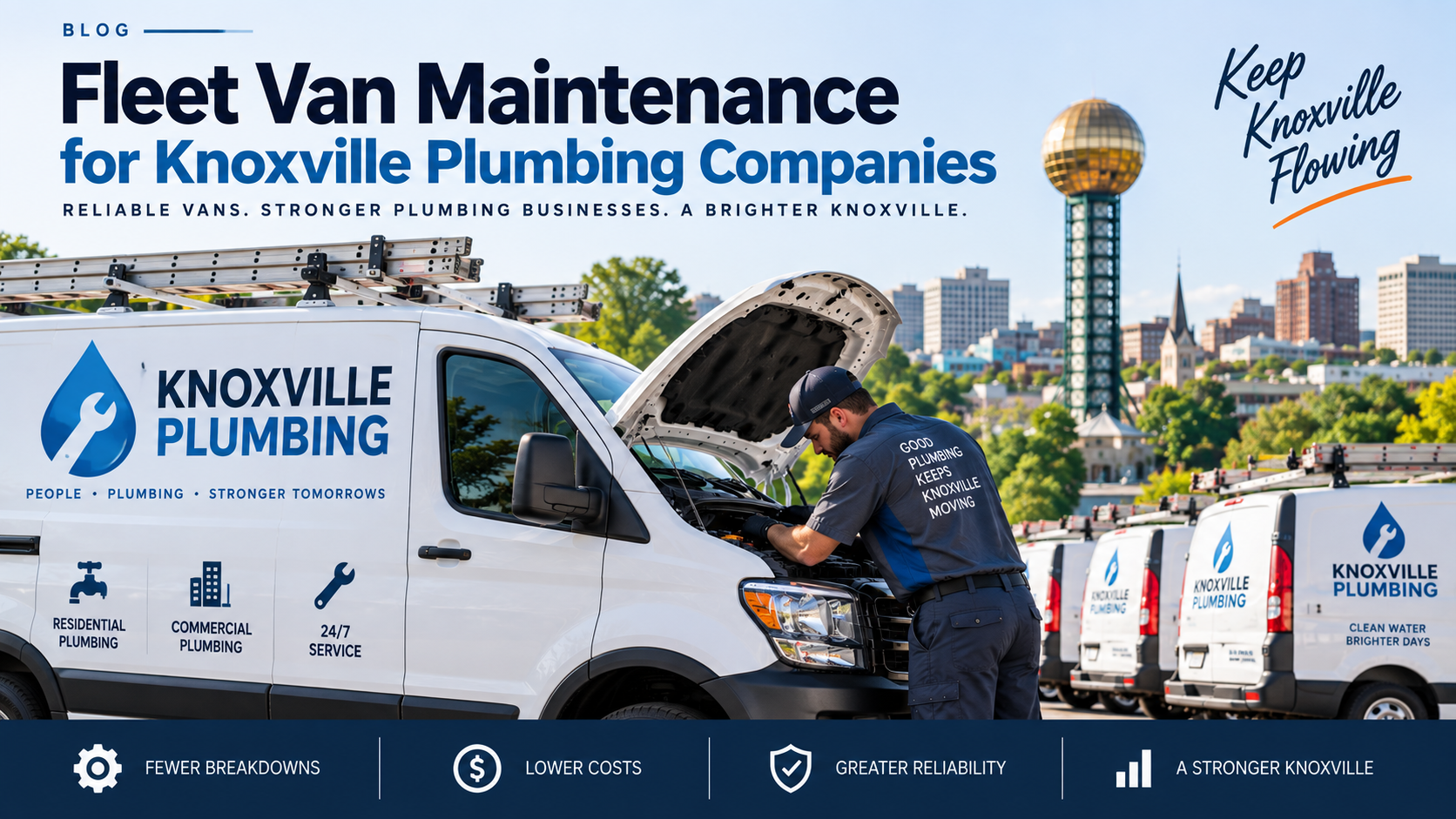
A plumbing service van is essentially a rolling warehouse. Before a technician drives anywhere, his vehicle is loaded with copper pipe, PVC, cast iron fittings, a full tool inventory, a drain snake or hydro-jetter, water heater components, and enough parts inventory to handle the two or three most common call types without a supply run. The total payload on a well-stocked plumbing van routinely runs between 800 and 1,200 pounds above the vehicle’s curb weight.
That weight matters more than most fleet owners account for. Manufacturers design service intervals around vehicles operating near their intended load range. A van that consistently runs at or near maximum payload wears its brakes, suspension, and drivetrain faster than the manufacturer’s standard intervals predict. A shop that doesn’t know your fleet doesn’t know to adjust for that. A shop that tracks your vehicles does.
The most common Knoxville plumbing fleets run Ford Transits, Ram ProMasters, and Mercedes Sprinter vans — some diesel, some gas. Sprinter-equipped plumbing operations get the Sprinter’s payload and interior advantages but take on the responsibility of finding a shop that actually knows how to work on a Mercedes diesel system, which narrows the field considerably.
The Wear Patterns Specific to Plumbing Work
Plumbing service calls have a movement pattern that puts specific stress on certain vehicle systems. Technicians park in driveways, squeeze down narrow side yards, and frequently idle the van while running tools or equipment from it. Short trips between calls — often five to fifteen minutes — mean the engine never fully reaches operating temperature before it starts again, which accelerates wear on oil, belts, and starter systems over time.
The physical act of loading and unloading a heavily stocked plumbing van dozens of times a day stresses the suspension and cargo floor in ways a highway driver would never experience. Rear springs, shock absorbers, and the structural components around the cargo area wear faster on a plumbing van than on a van doing lighter work, and most technicians don’t report those symptoms until something is already failing rather than just worn.
Knoxville’s hills add a layer to this. A technician running calls from Bearden to Powell and back is navigating elevation changes all day. Brakes and transmissions on a loaded van work harder in hilly terrain than flat-city equivalents, and the wear that accumulates over a full season of Knoxville routes is real.
The Reactive Maintenance Trap
The reactive maintenance model is extremely common in plumbing because plumbing companies are busy. When calls are coming in, vehicles tend to get serviced last. There’s always a reason to push the oil change another week, always a reason to wait on the tire rotation, always a reason to address the noise “when things slow down.” Things rarely slow down.
The problem isn’t that plumbing owners don’t care about their trucks. The problem is that reactive maintenance is structurally more expensive than proactive maintenance, and the damage compounds over time. Brake pads that get ignored until they’re worn to the metal take the rotors with them. Coolant that runs low because nobody checked it becomes an overheated engine on a hot July afternoon. An oil change that’s 3,000 miles overdue becomes a sludge problem that shortens an engine’s life by years.
A fleet shop that tracks your vehicles by mileage and service history flips that dynamic. Instead of fixing what broke, you’re addressing what’s approaching its limit before it becomes a breakdown. For a plumbing company with five or ten vehicles on the road, the cumulative savings from that shift in approach are substantial.
What a Dedicated Fleet Shop Does Differently
The difference between a shop that handles fleet work and a shop that handles walk-in retail customers isn’t just capacity — it’s orientation. A fleet shop builds a file on each of your vehicles, tracks what’s been done and what’s coming due, and flags issues before they become failures. When you call, your vehicles get priority over retail customers who walked in off the street, because you have a relationship that depends on turnaround time.
For Knoxville plumbing companies specifically, a shop with Sprinter experience and diesel expertise covers the full range of what most plumbing fleets run. That means one shop relationship handles everything rather than routing diesel vans to one place and domestic vans to another.
The right fleet shop also understands plumbing payload. When a technician brings in his van, the shop knows it’s been running heavy, and they inspect brake wear, suspension components, and tire condition accordingly — not just the items on a generic service checklist.
Where to Start
If fleet maintenance has been informal up to this point, the starting place is a fleet inspection. Bring each vehicle in, get a written condition report, and see where you actually stand. Most plumbing operators who go through that process for the first time find two or three deferred issues that are six to eight weeks away from becoming roadside problems.
That’s usually the only argument needed.
For more on fleet maintenance planning, our guide to building a preventive maintenance schedule for Knoxville service vans walks through the full process. Our article on five signs your Knoxville fleet needs a dedicated shop can also help you evaluate where your current approach stands.
Let’s Talk About Your Fleet
Knox Speed & Diesel provides fleet vehicle service for Knoxville service companies, with expertise in Mercedes Sprinter vans, diesel engines, and domestic work vans including the Ford Transit and Ram ProMaster. To schedule a fleet inspection or discuss fleet service for your plumbing operation, Visit our fleet service page in Knoxville, contact us online, or call (865) 351-3941. We’re at 227 Sherway Rd, Knoxville, TN — Monday through Friday, 7:30 AM to 5:30 PM.